
Back to all articles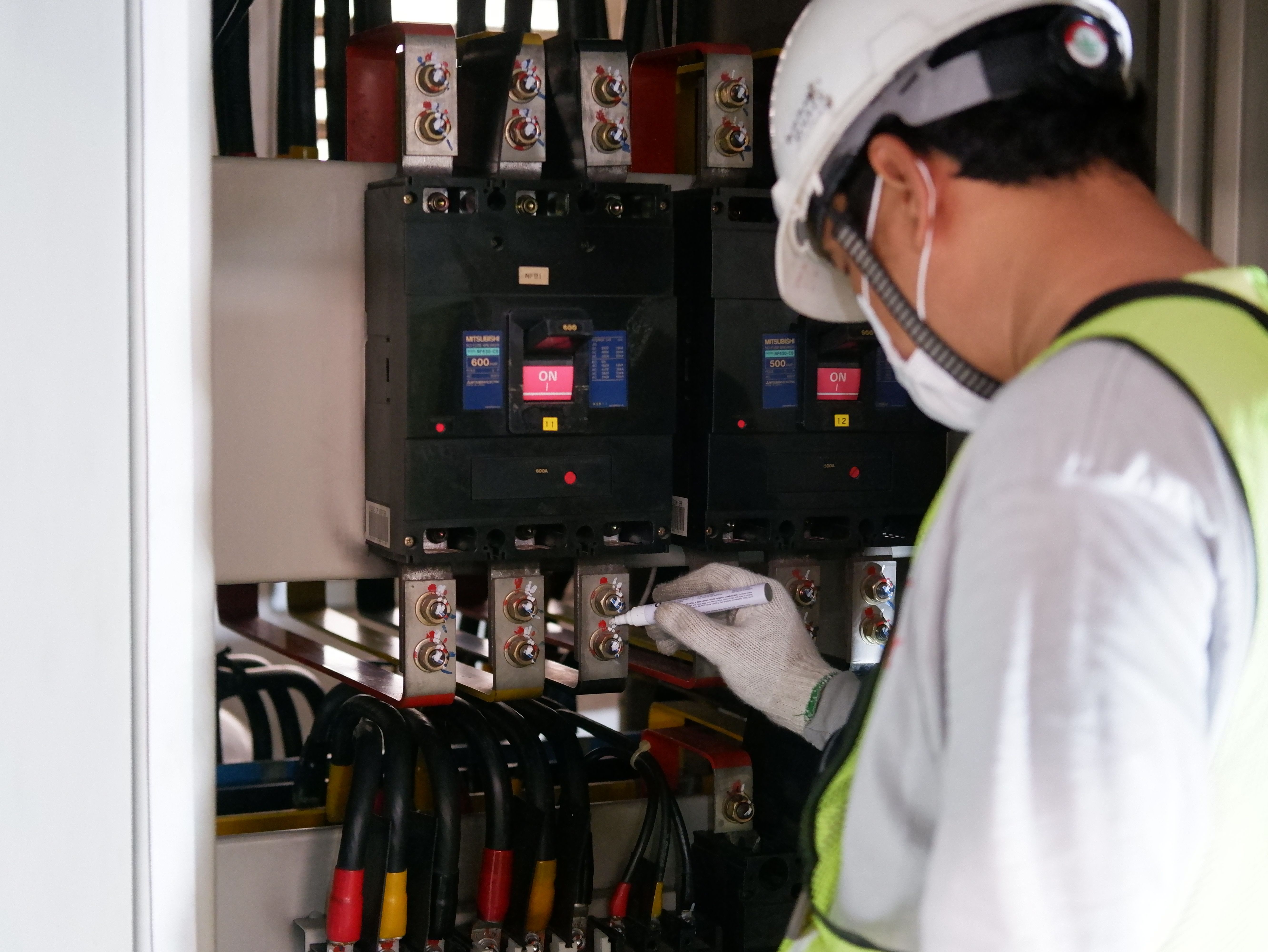
Electrical
Advancements in Switchgear Technology and Maintenance
5 min read
Switchgear forms the backbone of every modern electrical distribution system. Whether it is a manufacturing facility, commercial building, power plant, data center, or utility substation, switchgear ensures the safe control, protection, and isolation of electrical equipment. As industries continue to expand and demand uninterrupted power, switchgear technology has evolved significantly, offering greater reliability, enhanced safety, and intelligent monitoring capabilities.
From conventional Vacuum Circuit Breakers (VCB) to Sulfur Hexafluoride (SF6) systems and the latest digital switchgear solutions, technological innovations are transforming the electrical industry. Modern maintenance practices are also shifting from reactive repairs to predictive and condition-based maintenance, helping organizations reduce downtime while maximizing equipment life.
What is Switchgear?
Switchgear is an assembly of electrical disconnect switches, circuit breakers, protective relays, fuses, instrument transformers, and control equipment used to protect and control electrical circuits. Its primary function is to detect faults, isolate damaged sections, and ensure uninterrupted power supply to healthy parts of the system.
Switchgear is commonly categorized into:
Low Voltage (LV) Switchgear (up to 1 kV)
Medium Voltage (MV) Switchgear (1 kV–36 kV)
High Voltage (HV) Switchgear (above 36 kV)
Each category serves different industrial and commercial applications while maintaining electrical safety and operational continuity.
Evolution of Switchgear Technology
Traditional oil circuit breakers have largely been replaced by Vacuum Circuit Breakers due to their superior arc extinction capability, minimal maintenance requirements, and environmental friendliness.
Vacuum technology offers several advantages including:
Long service life
High mechanical endurance
Minimal contact wear
Reduced maintenance frequency
Excellent interruption performance
For higher voltage applications, SF6 Gas Insulated Switchgear (GIS) has become widely adopted because of its compact design and excellent dielectric strength. However, with increasing environmental concerns regarding SF6 emissions, manufacturers are now developing eco-friendly alternatives using clean air insulation and low Global Warming Potential (GWP) gases.
Smart Digital Switchgear
One of the biggest advancements in recent years is the integration of digital monitoring systems.
Modern switchgear now incorporates:
IoT-enabled sensors
Wireless monitoring
Remote diagnostics
Thermal imaging integration
Online partial discharge monitoring
Cloud-based analytics
Predictive maintenance software
These technologies provide continuous visibility into equipment health, allowing maintenance teams to detect abnormalities before failures occur.
Condition-Based Maintenance
Traditional maintenance relied heavily on periodic inspection schedules regardless of equipment condition.
Today, industries are adopting Condition-Based Maintenance (CBM), where maintenance activities are performed based on actual equipment health.
Parameters monitored include:
Temperature rise
Partial discharge
Contact resistance
Humidity
Gas density
Mechanical operation count
Insulation resistance
This approach minimizes unnecessary shutdowns while preventing catastrophic failures.
Safety Improvements
Modern switchgear incorporates multiple safety features including:
Arc Flash Protection
Interlocking mechanisms
Remote racking systems
Digital protection relays
High-speed fault isolation
Pressure relief systems
These improvements significantly reduce operational risks for maintenance personnel.
Role of Predictive Analytics
Artificial Intelligence and Machine Learning are increasingly being integrated with electrical asset management.
Predictive algorithms analyze years of operational data to estimate:
Remaining equipment life
Failure probability
Maintenance scheduling
Load forecasting
Fault prediction
This enables asset managers to optimize maintenance budgets while improving system reliability.
Environmental Sustainability
Environmental regulations are driving innovation toward sustainable switchgear technologies.
Manufacturers are focusing on:
SF6-free switchgear
Recyclable insulation materials
Energy-efficient manufacturing
Lower carbon emissions
Compact designs with reduced material usage
These developments contribute toward greener electrical infrastructure.
Best Maintenance Practices
Regular visual inspections
Infrared thermography
Contact resistance measurement
Insulation resistance testing
Vacuum bottle integrity testing
Protection relay calibration
Mechanical operation testing
Cleaning and lubrication
Periodic commissioning tests
Future Trends
The future of switchgear lies in fully digital substations integrated with Industrial IoT, AI-driven diagnostics, digital twins, and autonomous maintenance scheduling.
With increasing renewable energy integration, electric vehicle infrastructure, and smart grids, advanced switchgear technologies will continue playing a critical role in ensuring reliable and efficient power distribution.
Organizations investing in intelligent switchgear today will benefit from lower maintenance costs, improved safety, enhanced operational efficiency, and greater long-term asset reliability.